
The Uniform and the Aftermath
Losing faith and starting to find it again, fifteen years later.

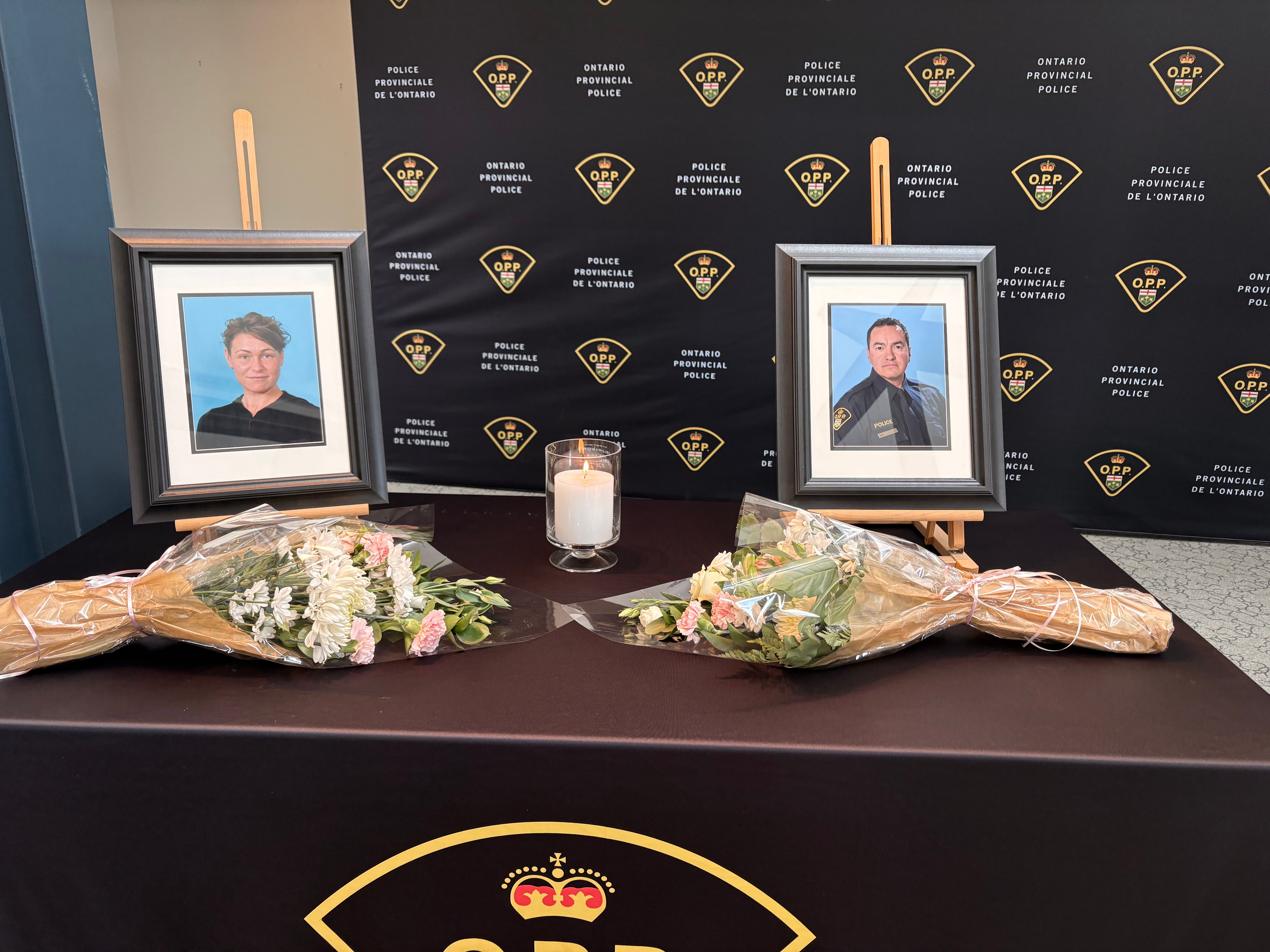
On October 8, 2025 I attended the Ontario Provincial Police Suicide Memorial in Orillia, Ontario. It took place twenty-seven years after Cindy swore an oath to serve and protect her fellow citizens. And fifteen years after Cindy died by her own hand.
It felt like the completion of a journey I hadn’t realized I was on. Or maybe it’s the closing of a chapter on a story whose ending has yet to be written. Either way, the day mattered to me in ways I still find surprising, especially considering our complex relationship with the OPP.
So Young and So Full of Optimism
Cindy joined the OPP in April of 1998 at the tender age of twenty-six. She was one of less than one hundred selected from close to five thousand applicants. She’d made it. We’d made it.
After years of living paycheque to paycheque, we’d finally have some extra money. She had an actual career doing something important. We might be able to buy a house one day. This new sense of possibility and optimism was thrilling.
The memory of us celebrating by dancing (poorly) around the living room of our tiny one bedroom apartment is as fresh as if it happened yesterday. It was a wonderful moment of joy and hope for a young, newly married couple eager to start their lives and raise a family. We were standing at the bright edge of a story we didn’t yet know would end lives and break hearts. It’s jarring to look back now and realize how unknown the future can be.
A Path Too Well-Trodden
Cindy followed an all-too-common path towards a career in policing. She lived through a childhood full of trauma and sadness. She was raised by a schizophrenic mother, physically and sexually abused, abandoned and left to fend for herself much of the time. She learned early that the only person coming to save her was herself.
She saw achievement as her path to a better life. And as a way to prove her mother wrong. She finished high school, left the godforsaken town she grew up in, and went off to college. She graduated and applied to university to complete her degree in Psychology. My young, rudderless self was consistently amazed, and intimidated, by her dedication and focus.
But I was someone who was raised in a blissfully safe and loving home by two parents. It was the only thing I knew and I took it for granted. I didn’t understand what was fuelling Cindy’s drive to succeed. I’m not sure she did either.
I spent a lot of time wondering what such a beautiful, motivated woman saw in me. I think my parents wondered the same thing. I certainly wasn’t showing much potential at the time.
We moved in together and we seemed perfect for one another. We were in love and talking about our futures together. It was an exciting, euphoric time. What could possibly go wrong?
Cindy and I talked about her upbringing often, but she left out the worst parts. She never revealed the sexual abuse she suffered. Despite that, I was still horrified at her experiences. It was so different from my life, it was impossible for me to relate to.
Her upbringing drove her to become a cop. It was an opportunity to protect people who couldn’t protect themselves. She’d make sure other abusers paid for their crimes. And maybe she’d heal herself in the process.
Neither of us understood trauma’s half-life. Cindy saw it as something from the distant past that she’d outrun, outworked and put behind her. In the blissful naivety of youth, I thought so too.
It’s Not What You Do. It’s Who You are.
This message was drilled into the recruits in Cindy’s class at the police academy. She’d just joined an elite tribe of warriors protecting the public. Policing wasn’t just a job. It was their identities, on or off the job. She eagerly bought into it. It was the first time in her life she felt like she belonged.
These messages serve a purpose. The instructors were tasked with turning young, inexperienced recruits into cops capable of performing at their best under pressure. They’d also serve to tighten the figurative noose around Cindy’s neck as her mental health unraveled.
This isn’t about the details of Cindy’s illness; it’s about her relationship with the OPP.
Over the course of about five years, Cindy’s demons slowly strangled the life from her. She took extended periods of time off work. She was rarely capable of being on the road, serving the public. And often, when she was on the road, she shouldn’t have been. More on that later.
Policing can be a ruthless profession. It’s hyper-competitive, bureaucratic and god forbid if you make an error in judgement at work. The consequences can be fatal and career-ending. In that environment, cops on “light duties” are at the bottom of the pecking order. They’re often seen weaselling their way off the road, leaving their teammates to pick up their slack.
Cindy could see her career was over. Even if she somehow recovered, she knew she’d been issued the Scarlet Letter. She was weak and damaged. No one was going to give her an opportunity again. Her only option was to stay on the road as a front line police officer. The exact job her mental health issues made impossible.
In the end, Cindy’s identity was destroyed. She saw herself as a failure as a wife, mother and friend. A return to policing seemed out of the question. If being a cop was who she supposed to be, who was she now that it had all gone up in flames? She was a nobody. A loser and a burden. Everyone would be better off without her.
The Aftermath
Cindy took her own life on March 26, 2010. Her co-workers came to the house, sat me down and told me she had taken her own life. Other than her funeral, it was the last time I ever spoke to any of them.
We weren’t offered a full-police funeral. Police suicide was more taboo back then. I’m not sure how I would have responded had I been asked. Cindy had become so resentful of the OPP over the years, that a police funeral almost seemed like a final insult.
About fifty of her fellow cops showed up at the funeral. I was grateful they showed up and for the conversations we shared. They helped me understand more of what Cindy was going through and what it was like to work with her. It wasn’t easy.
A few of them pulled me aside and told me something that I didn’t expect. They said, “We all knew how badly Cindy was struggling. We just didn’t know what to do. We didn’t want to throw her under the bus.”
Cindy had been involved in an unusual single-vehicle accident about four months before her death. She hadn’t worked since. Her coworkers told me that they were convinced the accident was intentional and she was trying to kill herself at work. It would have been financially advantageous to us had she died on the job.
I stood there in mild shock. These cops, knew how badly she was struggling and said nothing? Because they didn’t want to ruin her career? What about the public? What about Cindy? They allowed a cop, in the grips of a battle with horrifying mental health issues, to carry a gun and interact with the public?
I should note that we’d separated by this time. It’s why I didn’t understand the severity of what was happening at work. Cindy had become increasingly more erratic, risky and abusive over the years. In a fit of rage, she threw me out of the house and I left. We were still married and I still loved her deeply. We’d been together for sixteen years and had two daughters together. I was worried sick about her and what would become of her life.
After the funeral, I wrote to the then Commissioner of the OPP, Julian Fantino. I explained to him what I’d heard at Cindy’s funeral and I pleaded with him as the leader of his organization to change the culture that allowed this to happen. He was the only one who could do it.
How did he respond? I heard nothing from him directly. He didn’t bother to reply to me, a grieving husband of one of his officers who’d just killed herself. Instead, I was shuffled off to someone in their workplace health and safety team. She was a wonderful woman committed to making change. But, for the Commissioner not to respond to me, told me everything I needed to know about the culture at the OPP.
And that was pretty much it. I recorded a video for the OPP on mental health and never talked to them again. No one reached out. Not a single person. Cindy was a cop for twelve years. Now she was dead and it was like her police force forgot about her, and us.
The only other interaction I had with the OPP, until this year, was in 2015. Someone called me, five years after Cindy’s death. They told me they’d found her duty bag in the back of an evidence locker and wanted to know if I wanted it. Five fucking years later. Nothing surprised me at this point.
The Present
Other than having friends who are cops, I’d mostly forgotten about the OPP. Cindy has been dead for a long time and our lives have moved on. We’d also lost our nineteen year-old daughter to mental health issues that were directly related to Cindy’s suicide. Needless to say, we had other priorities.
I wrote about the intergenerational impact of police suicide here:
Left Behind: The Intergenerational Impact of Police Suicide

On June 22, 2025, my family and I attended the Ontario Police Suicide Memorial in Toronto. It was an emotional, somber, and profoundly necessary tribute to those who have lost their lives because of the line of duty. I’d never heard that phrase before. I teared up each time it was spoken during the ceremony.
Earlier this year (2025), someone reached out to me and told me that the OPP was having a suicide memorial for fallen officers. Keep in mind, this wasn’t someone from inside the OPP.
I reached out and was told that there was a suicide memorial happening in May. Cindy would be honoured on their memorial wall and of course we were invited. I was surprised how much I cared. It was much more important to me than I thought.
But, continuing the theme of the last fifteen years, it didn’t go well. The person in charge of organizing the memorial ghosted me. No response to multiple emails. I’m not sure what happened but the bottom line is that once again, the OPP caused a grieving family pain that it didn’t need or want.
I have a TikTok channel where I talk about grief and growth. I made a video explaining the situation and how once again Cindy’d been posthumously kicked in the teeth. It went somewhat viral and I received many, many messages from current and former officers talking about their mistreatment at the hands of their police services.
That led to a wonderful woman from Canada Beyond the Blue contacting me. She told me about the province-wide police suicide memorial happening in a few months and invited me. More importantly, she also told me she would reach out to the OPP and take care of everything. She is a fierce, deeply compassionate woman who is making a national difference in how police services treat mental health and suicide.
It was the first time, in fifteen years, that I felt like someone gave a shit. I went upstairs to tell my wife about the conversation and started bawling. I didn't know I still cared about this after all this time. It turns out I do, and feeling seen and heard by someone who cared made me finally realize it. Grief knows no timeline.
The Memorial
The OPP rescheduled their second annual suicide memorial to October 8, 2025. Someone else reached out to me this time and it was a completely different experience than anything that’d happened before.
Chris Hawkins is a twenty-year veteran of the OPP. Just the type of person one might think would be cynical and jaded. Not this guy. I could feel the compassion and authenticity in his voice when I talked to him. He is committed to ensuring the OPP does right by its officers. In both life and death.
Chris is an example of the impact a single human being can make on someone else. I had given up on the OPP as a dysfunctional mess of a government organization that can’t be fixed. One conversation with Chris gave me real hope that things might be changing. Changing an organization like the OPP is like steering the Titanic. But men like Chris make me believe the iceberg might finally be behind them.
My mind was racing as I pulled into the parking lot of OPP headquarters. I felt grateful that it was happening and that I was entering enemy territory at the same time.
I needn’t have worried. There were only two families this year and the intimacy added to the beauty of it for me. We were greeted at our cars and escorted into the building by people who obviously cared. My head was spinning trying to process that this was all really happening.
There were senior officers lining the halls as we walked to the library where the ceremony would be held. As I write this, the tears still flow, thinking about how much that simple show of respect meant to me.
The Commissioner of the OPP, Thomas Carrique, and his deputy commissioners were there. They each introduced themselves, looked me in the eyes and told me they were glad I was there and that they were sorry for my loss. I believe they meant it and that meant something to me.
The memorial speeches were meaningful, heartfelt and just the right length of time. It was an emotional experience and our capacities to deal with a long drawn out ceremony were limited, at best. The memorial ended with their plaques being unveiled on the memorial wall.
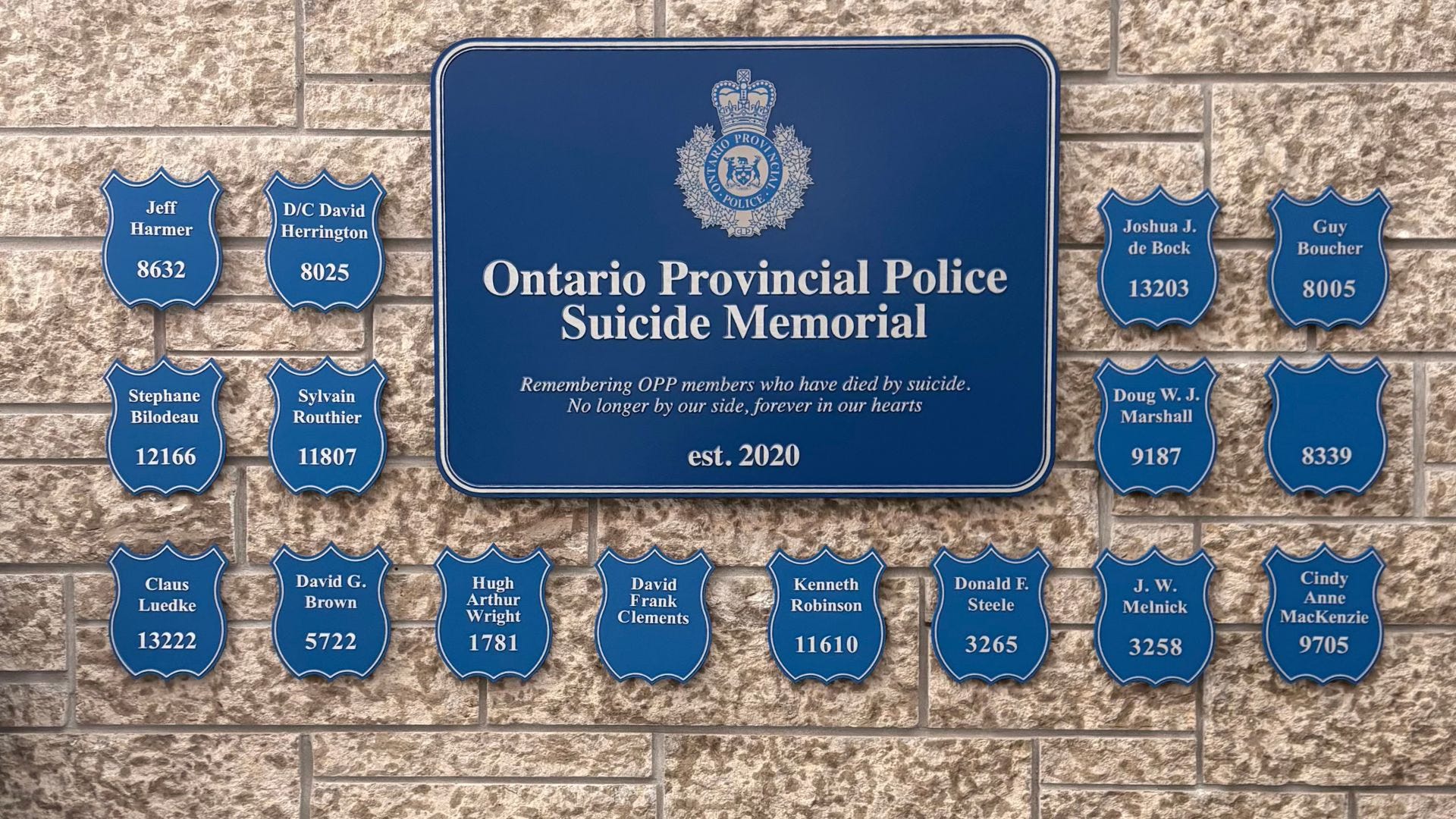
We were taken to another suicide memorial on the front lawn and given time for a moment of quiet reflection. The symbolism of having a suicide memorial front and centre gave me hope that things are truly changing. We ended up back in the library for refreshments and quiet conversation.
As the officers trickled out of the room and back to work, I noticed something that caused a lump in my throat. As they left, most stopped in front of the pictures of Cindy and Provincial Constable Clause Luke. They paused and bowed their heads in a show of respect. I wonder if they realize the impact their simple gesture made to a couple of grieving families.
Reflections
The OPP didn’t cause Cindy’s death. Nor was it only the result of the trauma inflicted on her as a police officer. Her life was, like all lives, a complex tapestry of experiences and decisions. I’ve never seen someone work harder to overcome the demons that stalked her. In the end, they were too powerful.
But the OPP contributed to making an already nightmarish situation more difficult than it needed to be. She belonged, until she didn’t. She did meaningful work, until she couldn’t. She had close friends at work, until she didn’t. A sense of belonging was one more thing mental illness stole from her. The OPP made that much too easy.
This story is not intended to re-litigate the past. I’ve spoken and written about that countless times. I’m sharing the past to illustrate why I’d lost any hope of the OPP remembering Cindy, and others, in a way that mattered.
The memorial didn’t erase the pain of what happened. It didn’t rewrite the past or undo the silence that had deepened Cindy’s pain. But it offered something I never expected.
Hope.
Hope that the next generation of officers won’t have to hide their pain to belong. Hope that leaders like Chris and organizations like Canada Beyond the Blue will keep widening the circle of compassion. And hope that families like ours will no longer have to carry their grief alone, wondering if anyone on the inside ever truly cared.
Cindy’s story isn’t over. It’s now part of a larger story of healing, humanity, and the courage to do better.
Stories like ours remind me how many men are silently fighting battles they don’t know how to win.
Most men try to think their way out of pain. I did too. Hell, I still do at times.
10 Hard Truths Every Man Needs to Hear About Grief is the guide I wish I’d had.
It’s straight talk about what grief does to you, and how to stop getting stuck in it.
Your story is truly heartbreaking. I completely agree that grief has no set timeline. Please know that Cindy’s story continues to live on with you, and you are not alone in this journey.
So much to say and no words right now. Just sat here shaking my head and wiping away tears. We'll talk, I know, about this and many of your posts, but organisational duty of care is something that boils my blood when it's not just neglected but actively overridden. I went to a police wellbeing conference a few years ago with my dear colleague Ed, a police sergeant medically retired with PTSD. We were talking about evidence based practice to prevent (or at least minimise the risk of) PTSD. The chief officer responsible for wellbeing did his opening speech and then walked out before Ed started talking. An unforgivable act that I will never forget. The fact that he was clearly oblivious to the impact of his behaviour meant he should never have been in that role! There is SO much to do to! Thinking of you Jason