
When Things That Make No Sense Make Perfect Sense
The pain won't kill you, but what you're doing might

Nothing destroys your sense of order like losing someone or something you love.
Before this, you were someone who had things figured out. You had rules for yourself, and you followed them most of the time. You thought you knew how you’d handle the worst if it ever happened. You believed you’d be the man who stepped up when life got hard.
But grief doesn’t care about your plans. You’ve lost someone or something that meant a hell of a lot to you. Now, nothing makes sense anymore.
Desperately Reaching for Control
You don’t feel like the man you thought you’d be in this moment.
The version of you who had control, who could handle anything, is gone. You’re left with chaos you can’t get your arms around, thoughts you never imagined having, emotions that feel unbearable.
It’s making you feel like a pathetic fucking failure.
So you reach for something - anything - that brings even a shred of order back into the disaster unfolding around you. You drink, you work, you gamble, you scroll until your eyes burn. You’ll do anything to quiet the noise, so you can function. Or at least pretend to. It’s not random. It’s not reckless. It’s survival.
And at first, it seems to work. The relief feels like a gift from God.
And Now, You’re Trapped
You tell yourself, just this once. Just one drink. Just one all-nighter at work. Just one more round of scrolling, just one more bet, just one more thing to take the edge off.
Then, before you know it, it's not "just one more"—it's the thing you have to do. Because the only thing worse than keeping up the cycle is trying to stop it. You know you can’t. And if you could? The pain is right there waiting for you.
Right now, what you’re doing makes perfect sense to you. It doesn’t make sense to everyone else. Especially not to the people who love you. But to you? It does. You’re not acting without reason. You’re acting based on what your brain believes will keep you from falling apart.
I know, because I’ve lived it. Over and over and over. I’d wake up hungover, full of shame and regret. I’d promise myself—and mean it—that I would never do something so stupid again. I’d convince myself I was back in control, steering toward a better life.
I’d convince myself that smoking pot was less worse than having to face the pain of losing my daughter. I knew it was a mistake. But I just didn’t care. I couldn’t bear the thought of facing it any more. So I’d “quit.”
Then, within hours, the demons would find me again. They sniffed out my fear. And the elephant hated the demons.
The Rider and the Elephant
At some point, I heard an analogy from a mentor that’s stuck with me to this day.
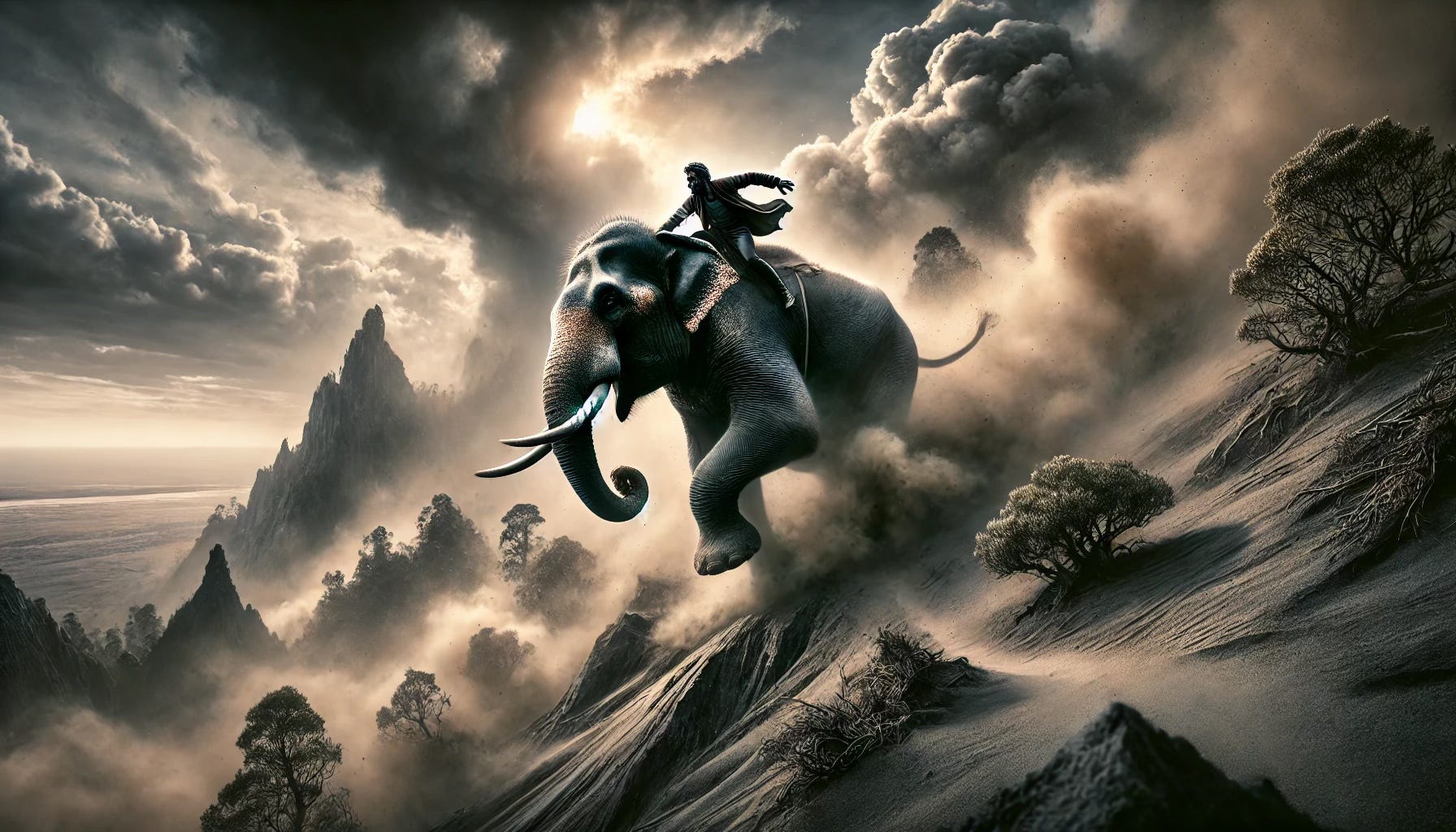
He told me, "Imagine there’s a rider and an elephant." The rider is the logical part of you. It’s the part that men love - that they pride themselves on. He’s the one who makes plans, sets rules, sticks to routines. He believes he’s the one steering the elephant.
But that’s a lie. Because the elephant—the emotional part of you—is bigger, stronger, and doesn’t give a damn about the rider’s plans. When things are calm, the rider thinks he’s in control. He believes he’s guiding the elephant down the right path, making disciplined choices, being the man he set out to be.
But the truth is, the rider was never actually steering. He only thought he was—because the elephant hadn’t been started stampeding yet. Then grief hit and it brought all the same agony it always does. And in that moment, the illusion was exposed. The elephant panicked. The elephant took off. And the rider? He had two choices: hold on, or get thrown off completely.
The Trap
You reach for something to numb the pain. It works—for a minute. Then shame and regret hit. That pain is unbearable, so you reach for something to numb it again. And again. And again. And that’s the cycle.
The more you repeat it, the deeper you sink. The worse you feel, the more you reach for the thing that’s destroying you. And the more you do it, the less control you have over any of it. You’re digging your own grave, one teaspoon at a time. Before you know it, you’re in over your head with no way out.
The Lies That Keep You Stuck
Grief feeds you a constant stream of bullshit that feels like the truth.
Often in those moments, nothing has ever felt more true.
"I have to be strong for everyone else."
"If I stop numbing out, I won’t be able to take the pain much longer."
"If I lose control, I’ll fall into hell and never escape."
"No one gets it, so I have to carry this alone."
But just because something feels true doesn’t mean it is true.
The Elephant Won’t Run Forever
Right now, it feels like if you let go, if you stop running, if you even try to slow down—you’ll get thrown off and trampled. That’s what grief makes you believe. But the elephant isn’t trying to kill you. It’s panicked. Fear has hijacked its senses. And like any panicked animal, it will settle - f you don’t fight it. If you just hold on.
The mistake most men make is thinking they have to control it. White-knuckling the reins. Yanking harder. Trying to force the elephant to obey. But that’s not how you stay on. That’s how you get thrown off. A skilled rider doesn’t try to overpower the elephant. They lean into it. They stay centered. They move with it until it stops running.
Grief is no different. You don’t muscle your way through it. You ride it out.
Three Questions that Might Change Your Future
So before you tell yourself, “I can’t take this pain”, pause for a second.
Not to fix it. Not to judge yourself.
Just to be honest. Ask yourself these questions and let yourself sit with them.
If this thing you keep reaching for was the solution, why are you still in pain?
What are you really trying to avoid when you do it?
And if you knew, without a doubt, that the elephant will settle—would you still need it?
Because once you see the pattern, you can’t unsee it. And once you know the trap, you have a better chance of not blindly walking into it. In time, you’ll come to realize the elephant was never the enemy.
Have You Struggled with What to Say?
Most people don’t see their own blind spots when it comes to dealing with grief or other hard emotions - their own or someone else’s. They don’t realize how often they invalidate emotions, even with the best intentions.
If you’ve ever struggled with what to say (or not say) when someone’s going through something hard, I put together something for you: "What Not to Say: 10 Mistakes that Make Grief and Hard Emotions Worse."
It’s a free, short, straight-to-the-point guide on the things people say that do more harm than good—and what to do instead.
So well put. I love the metaphor of the elephant.
I'm so sorry for your pain, and hope you find healing.
Opening the door of self awareness yet a little bit more and encouraging an open mind! Shifting how we observe our experiences and allowing us to be curious rather than hopeless. That’s where this post took me. Thanks !